
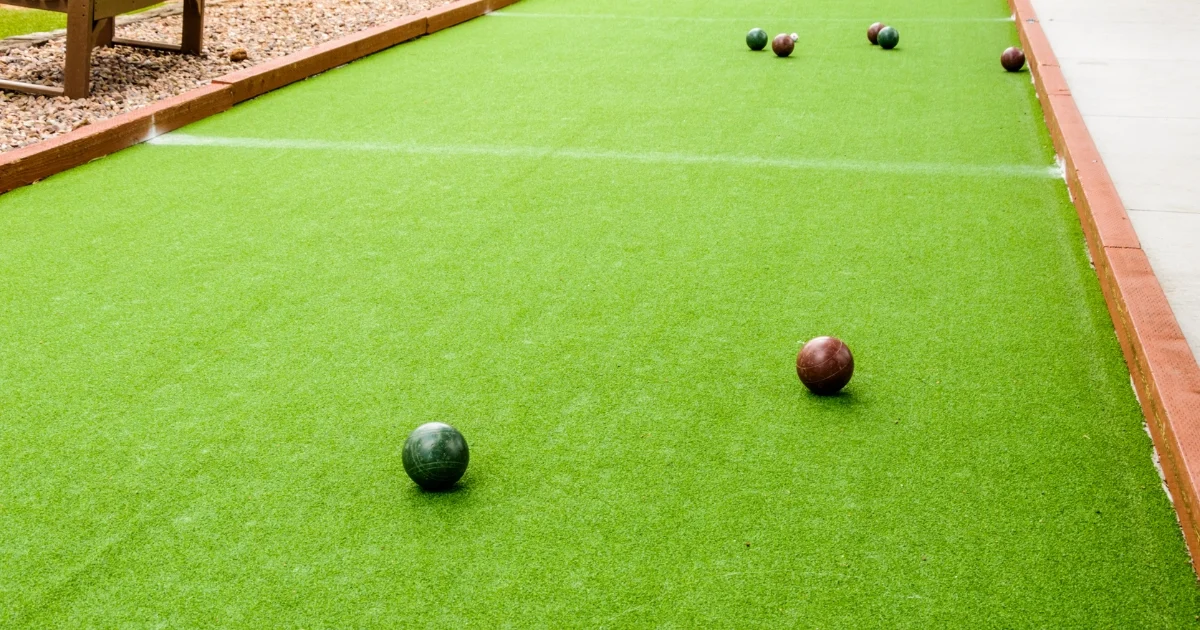
Backyard bocce ball has surged in popularity across Southern California, transforming outdoor spaces into social hubs for family gatherings and friendly competition. Whether you’re hosting weekend tournaments in Huntington Beach or casual games in Mission Viejo, the playing surface you choose directly impacts ball roll consistency, maintenance demands, and long-term enjoyment. Traditional surfaces like oyster shell, decomposed granite, and clay have served bocce enthusiasts for generations, but they come with significant drawbacks including constant replenishment, weather-related deterioration, and uneven playing conditions that frustrate players of all skill levels.
Modern homeowners and property managers are increasingly turning to artificial grass for bocce courts as the superior alternative. This shift isn’t just about aesthetics—it’s about performance, durability, and eliminating the ongoing maintenance headaches that plague traditional surfaces. Bocce ball court turf delivers consistent ball trajectory, withstands Southern California’s intense sun and occasional rain, and maintains regulation-quality conditions year-round without the need for raking, watering, or surface material replacement. For anyone considering backyard bocce court ideas, understanding why turf outperforms conventional options is the first step toward creating a professional-grade playing experience in your own outdoor space.
Why Bocce Ball Court Turf Outperforms Traditional Playing Surfaces
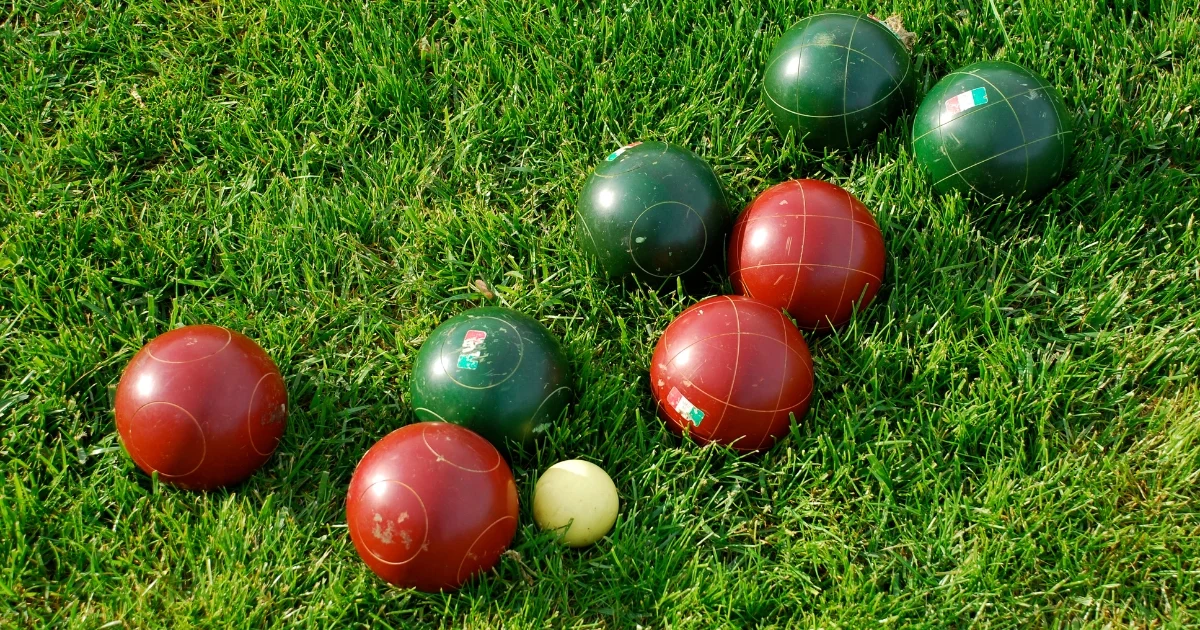
Traditional bocce surfaces present persistent challenges that artificial turf eliminates. Oyster shell, the classic East Coast choice, displaces with every game, creating divots and uneven areas that alter ball roll unpredictably. Decomposed granite, popular in California installations, compacts unevenly and develops hard spots that cause erratic bouncing. Clay courts demand constant moisture management—too dry, and they crack; too wet, and they become muddy and unplayable.
Bocce ball court turf solves these problems through engineered consistency. The synthetic fibers maintain uniform height and density across the entire playing surface, ensuring predictable ball roll from end to end. Unlike natural materials that shift, settle, or wash away during rain, quality turf stays perfectly level season after season. The permeable backing allows water to drain through immediately, so courts in Orange County remain playable within minutes of rainfall rather than sitting unusable for days while natural surfaces dry out. Synthetic turf bocce court specifications maintain consistent performance through temperature swings that cause clay to crack and decomposed granite to wash away.
Essential Turf Specifications for Optimal Bocce Court Performance
Not all artificial turf works for bocce applications. The best turf for backyard bocce requires specific characteristics that differ significantly from landscape turf or sports field products. Pile height stands as the most critical specification—too tall and balls lose momentum unpredictably, too short and the surface becomes hard and unforgiving. The optimal range falls between 10–15 mm, with 12 mm representing the sweet spot for most residential applications.
Fiber composition and backing materials determine long-term performance and playability. Polyethylene fibers offer the ideal combination of softness for comfortable play and resilience after foot traffic. Face weight between 50–65 ounces per square yard ensures adequate fiber density without creating excessive resistance that slows ball roll.
Key performance factors should address these specifications:
- Infill considerations: Most bocce applications perform best with no infill or minimal fine silica sand (never crumb rubber), as infill can create inconsistent ball behavior and complicate maintenance
- Turf density requirements: 50,000–60,000 stitches per square meter provides optimal fiber support without excessive thickness that affects gameplay
- UV stability ratings: Minimum 8,000-hour UV resistance testing ensures color retention and fiber integrity under California sun exposure
- Backing permeability standards: Dual-layer backing with drainage holes spaced 3–4 inches apart prevents water pooling and maintains surface integrity
- Fiber resilience specifications: Products with high fiber recovery rates maintain consistent playing conditions even in high-traffic areas
- Seam strength: Commercial-grade seaming tape and adhesive rated for outdoor sports applications prevents separation under stress
Infill vs. No-Infill Turf Systems for Bocce
The infill decision significantly impacts bocce ball behavior and court maintenance. No-infill systems provide the smoothest, most predictable ball roll, making them the preferred choice for serious players. The turf fibers stand upright through backing construction alone, eliminating variables that infill materials introduce.
Building Your Backyard Bocce Ball Court: Base Preparation and Installation Costs
Understanding how to build a bocce ball court starts with proper base construction—the foundation that ensures your turf performs flawlessly for decades. Professional installation begins with excavation to a depth of 4–6 inches, removing existing soil or sod. The first layer consists of 3–4 inches of crushed rock or decomposed granite compacted to proper density, creating a stable, permeable base that prevents settling.
Proper drainage installation is non-negotiable in bocce court construction. The base should slope slightly from center to edges (approximately one-quarter inch per foot), directing water away from the playing surface. Edge restraints—typically 4-by-4 treated lumber, composite bender board, or metal edging—frame the court and prevent base material migration.
Bocce court installation cost varies based on court dimensions, site conditions, and material selections. Here’s a transparent breakdown by common court sizes:
Climate-Specific Installation Considerations
Climate-specific considerations affect both installation approach and long-term performance. In Southern California’s inland areas like Anaheim where summer temperatures regularly exceed 100°F, lighter-colored turf fibers and products with heat-reflective technology reduce surface temperature by 15–20 degrees compared to standard green turf.
| Court Size | Total Investment (Installed) |
|---|---|
| 10-by-60-foot (Residential) | $4,500–$8,500 |
| 13-by-91-foot (Regulation) | $9,000–$15,000 |
| 12-by-70-foot (Mid-size) | $6,200–$11,000 |
Official bocce ball playing surface requirements emphasize consistency, levelness, and appropriate ball response characteristics. The surface should provide enough friction for controlled ball placement without excessive resistance that shortens throw distance. Quality turf installations meet these specifications immediately upon completion and maintain them throughout their lifespan, whereas traditional surfaces drift out of specification between maintenance cycles.
Ball speed consistency represents another critical requirement. Residential bocce court surface options vary widely in their ability to deliver predictable performance that serious players demand and casual players appreciate.
| Surface Type | Initial Cost (10-by-60-foot) | 10-Year Total |
|---|---|---|
| Bocce Ball Court Turf | $4,500–$8,500 | $5,000–$9,500 |
| Oyster Shell | $2,000–$3,500 | $6,000–$9,500 |
| Decomposed Granite | $1,800–$3,000 | $4,800–$8,000 |
| Clay | $2,500–$4,000 | $7,500–$12,000 |
Your Perfect Bocce Court Awaits at Go Turf Artificial Grass & Pavers
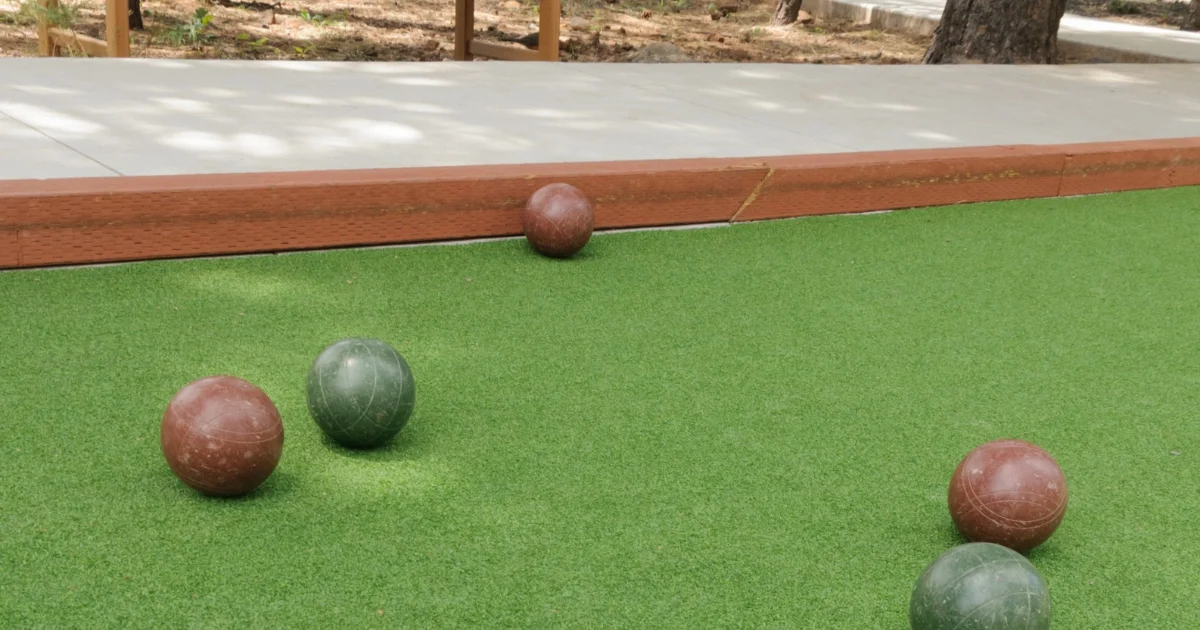
Creating a backyard bocce court that delivers professional-level performance while eliminating maintenance headaches starts with choosing the right surface and installation partner. Go Turf Artificial Grass & Pavers, Southern California’s trusted artificial grass and turf installation company, specializes in designing and installing regulation-quality bocce courts throughout Orange County and surrounding communities. Our team understands the precise specifications required for optimal gameplay, from selecting bocce ball court turf with the ideal pile height to engineering base systems that ensure perfect drainage and long-term stability. Whether you envision a compact residential court for family enjoyment or a full regulation installation for serious competition, we bring decades of artificial turf expertise to every project. Contact us today for a free consultation and discover how a professionally installed synthetic surface can transform your outdoor space into the gathering spot your home deserves.
FAQs
These common questions address the technical specifications, costs, and performance characteristics homeowners need to understand before installing artificial turf bocce courts.
1. What pile height is best for bocce ball court turf?
The optimal pile height for bocce courts ranges from 10–15 mm, with 12 mm being ideal for most residential applications. This height provides smooth ball roll while maintaining enough cushioning to prevent excessive bounce. Shorter pile heights create faster playing conditions similar to tournament courts, while slightly taller options offer more forgiveness for casual play.
2. How much does it cost to install artificial turf on a bocce ball court?
A residential 10-by-60-foot bocce court typically costs $4,500–$8,500 including base preparation and turf installation, while a regulation 13-by-91-foot court ranges from $9,000–$15,000. Costs vary based on existing site conditions, turf quality selection, drainage requirements, and regional labor rates. Properties requiring extensive excavation may see higher costs, but the investment eliminates ongoing maintenance expenses that traditional surfaces demand.
3. Do I need infill for my bocce ball court turf?
Most bocce courts perform best with minimal or no infill to ensure smooth, consistent ball roll. If infill is used, fine silica sand in very light amounts helps stabilize fibers without affecting gameplay. Crumb rubber infill should be avoided entirely as it creates unpredictable ball behavior and retains heat excessively in Southern California climates.
4. How long does bocce ball court turf last?
Quality artificial turf designed for bocce courts typically lasts 15–20 years with minimal maintenance. UV-stabilized fibers resist fading and degradation under intense sun exposure, while proper drainage installation prevents backing deterioration. Regular light brushing to maintain fiber orientation and occasional rinsing to remove debris are the only maintenance required to maximize lifespan.
5. Can artificial turf bocce courts be used year-round?
Yes, synthetic turf bocce courts are playable in all weather conditions, including rain, heat, and light snow. The permeable backing allows water to drain immediately, typically within minutes of rainfall, so courts remain usable when natural surfaces would be muddy or waterlogged. The surface maintains consistent playing characteristics regardless of season, temperature, or humidity levels, making it ideal for Southern California’s varied climate conditions.