
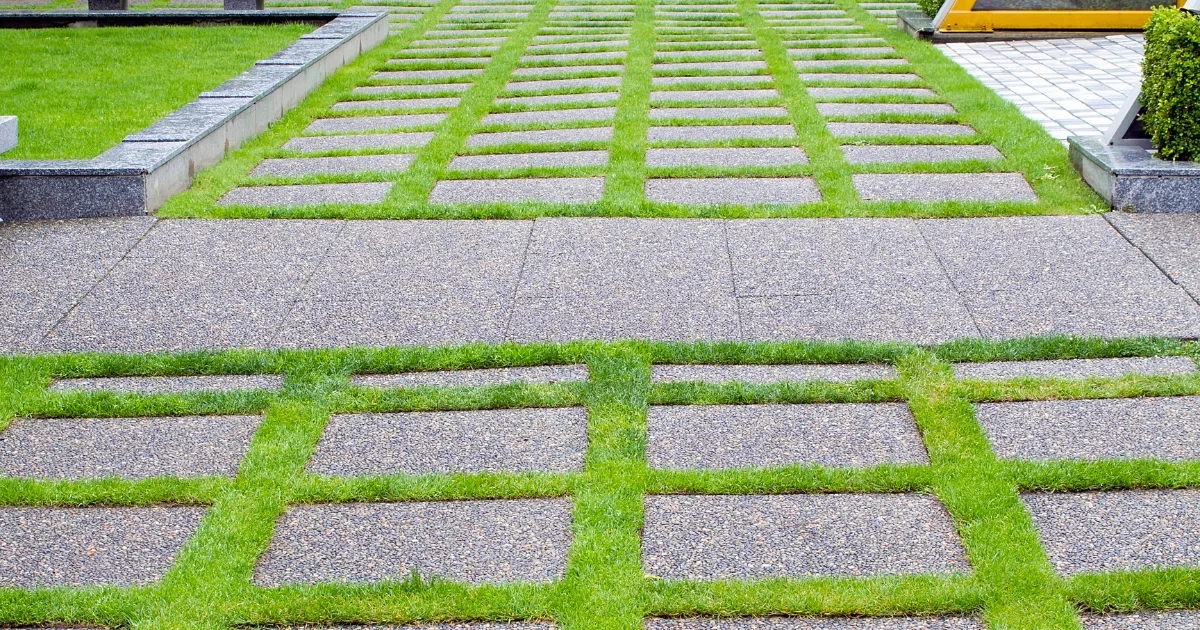
Imagine a driveway or patio where sleek pavers create clean lines and visual interest, while lush green turf fills the gaps between each stone—no brown patches, no muddy mess, and no weekly mowing required. This combination of hardscape and softscape delivers timeless curb appeal while solving the biggest frustration homeowners face with traditional landscaping: constant maintenance. Whether you’re designing a modern walkway, upgrading a tired driveway, or creating an inviting outdoor living space, pavers with grass in between offer the perfect balance of beauty and function.
The challenge with natural grass in those narrow gaps? It struggles in shade, requires tedious trimming with string trimmers, turns to mud during rainstorms, and goes dormant every winter. For Southern California homeowners who want year-round green without the water waste or weekend labor, this combination delivers the solution. This approach combines the durability of stone or concrete with the vibrant appearance of synthetic grass that stays perfect in every season, regardless of drought restrictions or heat waves.
Why Artificial Turf Between Pavers Outperforms Natural Grass
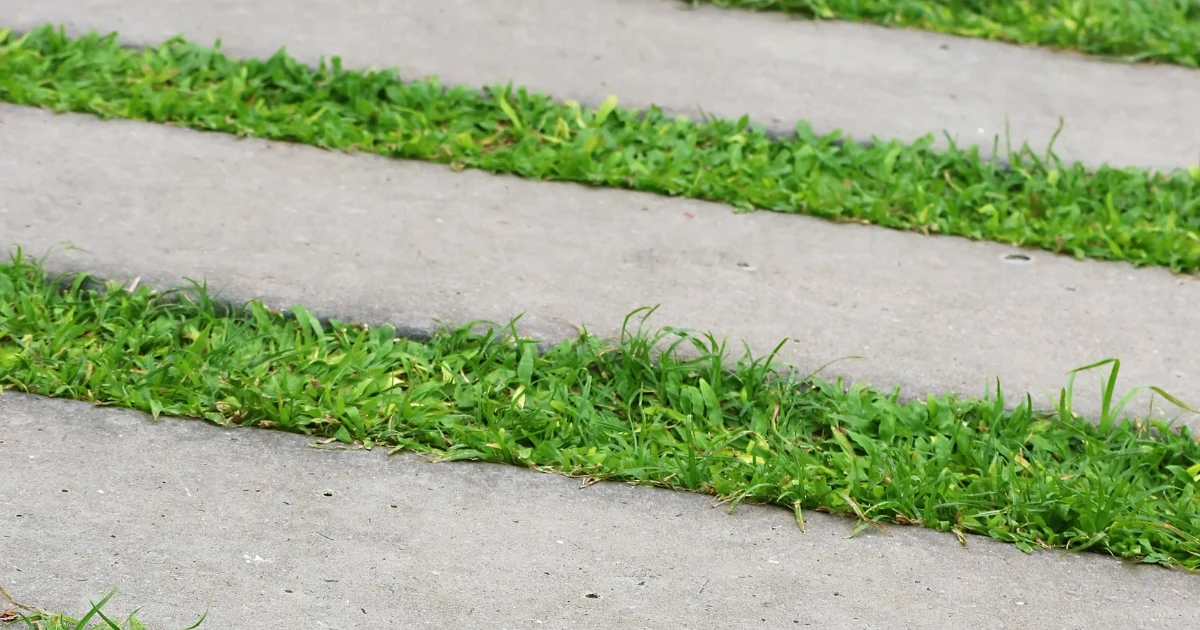
Natural grass in pavers with grass in between creates a maintenance nightmare that most homeowners underestimate until they’re three months into the project. The grass dies back in shaded areas under eaves or trees, leaving bare soil that tracks into your home. Weekly mowing becomes a frustrating chore as you maneuver a string trimmer around each stone. During Southern California’s rainy season, those grass-filled gaps turn into muddy troughs.
Synthetic grass paver systems eliminate these headaches. Modern artificial turf maintains consistent color and blade height year-round, regardless of sun exposure, foot traffic, or seasonal changes. Quality synthetic turf allows rainwater to drain through the backing into the crushed stone base below, preventing puddles while recharging groundwater. The turf never requires mowing, fertilizing, or pest control. Annual maintenance averages two to three hours—just rinsing and debris removal.
Cost Comparison: Natural Grass vs. Synthetic Turf
The financial case for synthetic turf becomes clear when you calculate total ownership costs over a decade. Industry estimates for a typical 200-square-foot driveway installation show the following comparison:
| Maintenance Factor | Natural Grass | Artificial Turf |
|---|---|---|
| Annual Maintenance Hours | 40-60 hours | 2-3 hours |
| Weekly Water Usage (typical driveway) | 15-25 gallons | 0 gallons |
| 10-Year Total Cost | $3,000-$5,000 | $200-$400 |
| Appearance Consistency | Seasonal variation, brown patches | Year-round green |
How to Install Stepping Stones with Turf for Maximum Durability
Foundation quality determines longevity. For residential walkways and patios, excavate eight to 10 inches below final grade. Driveways supporting vehicle weight require 12 to 14 inches of excavation to accommodate heavier base materials and prevent settling under load.
The base layer consists of crushed stone compacted in two-inch lifts. This permeable layer allows water to drain through the turf and pavers into the soil below. Top the crushed stone with a one-inch layer of coarse sand, screeded level to create a smooth setting bed for pavers.
Paver spacing affects both aesthetics and functionality. For walkways and patios, space pavers three to six inches apart to create visual rhythm while providing comfortable footing. Grass paver driveway ideas typically use four- to eight-inch gaps.
The artificial turf installation process for paver gaps requires precision cutting and proper edge securing. Key steps include:
- Measure each gap individually and cut turf pieces one-quarter inch larger than gap dimensions to ensure a snug fit without visible seams
- Apply landscape adhesive along paver edges in high-traffic areas to prevent turf migration
- Select infill material based on use—silica sand for patios, antimicrobial infill for pet areas, heavier rubber infill for driveways
- Brush infill into turf fibers using a power broom to help blades stand upright and improve drainage
- Test drainage by pouring water over completed sections, ensuring water flows through turf backing into base layer within seconds
Best Grass Paver Driveway Ideas and Design Combinations
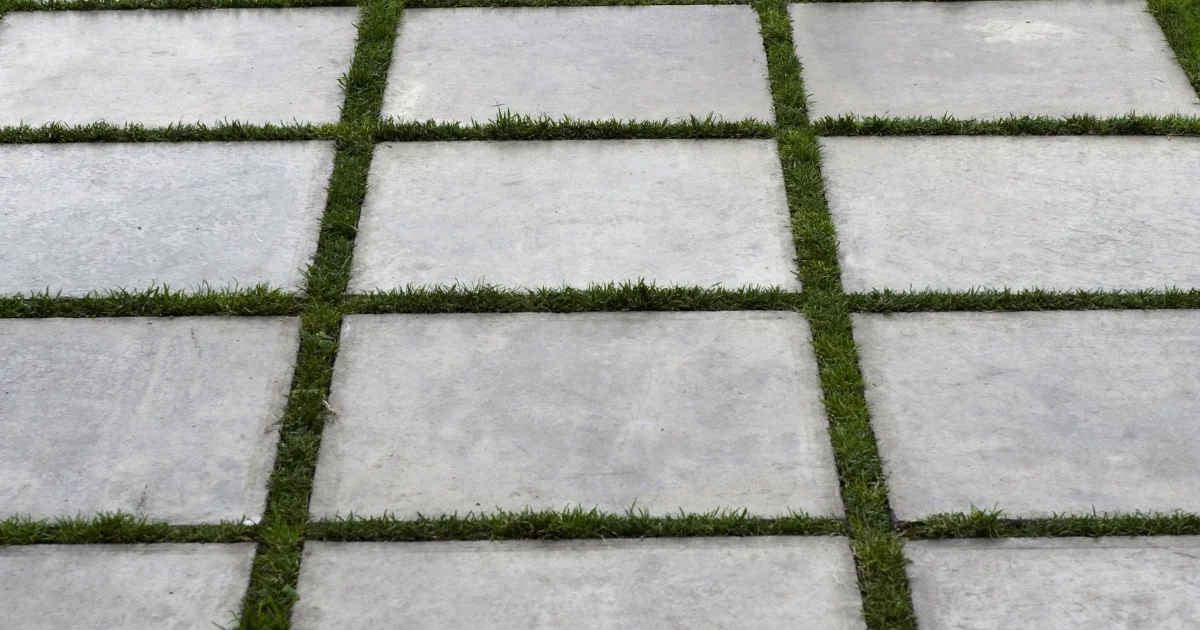
Design patterns range from traditional to ultra-modern depending on paver shape, spacing, and layout. Linear stepping stone paths create clean sight lines perfect for side yards and garden walkways—space 18- to 24-inch square pavers four to six inches apart with turf filling the gaps for a rhythmic, contemporary look. Checkerboard driveways alternate pavers and turf squares in equal proportions, creating bold visual impact while reducing hardscape material costs.
Material Selection Guide for Different Applications
When selecting materials for pavers with grass in between, the best choices depend on your specific application and climate. Driveway installations require shorter turf blade height (one to 1.5 inches) to prevent matting under tire traffic, while patio and walkway areas can use taller blades (1.5 to two inches) for a more natural appearance. Paver thickness matters for vehicle support—driveways need 2.5- to three-inch thick pavers, while pedestrian areas work fine with 1.5- to two-inch pavers that cost significantly less.
| Design Pattern | Best Application | Recommended Spacing |
|---|---|---|
| Linear Stepping Stones | Side yards, garden paths | 4-6 inches between pavers |
| Checkerboard | Driveways, large patios | Equal paver and turf squares |
| Curved Flagstone | Transitional walkways | Organic, irregular gaps |
| Geometric Hexagon | Modern patios, courtyards | 2-3 inches between pavers |
Extreme summer heat causes natural grass to go dormant even with daily watering, but quality synthetic grass paver systems with heat-reflective technology stay noticeably cooler than solid concrete surfaces. The pavers themselves absorb direct sun while turf in the shaded gaps remains comfortable for bare feet and pet paws even during hot summer weather.
Low Maintenance Paver Landscaping That Actually Stays Low-Maintenance
Cheap turf products degrade quickly, developing visible wear patterns and faded color that undermine the initial investment. Professional-grade synthetic turf carries manufacturer warranties exceeding a decade and maintains appearance through UV-resistant fibers and antimicrobial backing that prevents odor and bacterial growth.
Routine care requires minimal effort compared to natural grass alternatives. Rinse turf areas with a garden hose every few weeks to remove dust and pollen. Remove leaves and debris with a leaf blower rather than raking, which can damage turf fibers.
Pet owners appreciate how synthetic turf in paver gaps handles waste better than natural grass. Solid waste lifts cleanly from synthetic fibers without the staining and dead spots that plague natural lawns. Liquid waste drains through the permeable backing into the base layer, where antimicrobial infill neutralizes odors.
Pave the Way to Effortless Outdoor Living with Go Turf Artificial Grass & Pavers
Transforming your outdoor space with pavers with grass in between shouldn’t mean signing up for endless maintenance or watching your investment turn brown every summer. Whether you’re envisioning a stunning driveway that welcomes guests year-round, a patio that stays green without weekly watering, or walkways that never need mowing, the right combination of quality materials and expert installation makes all the difference. Go Turf Artificial Grass & Pavers specializes in creating beautiful, functional paver and turf combination designs throughout Orange County and surrounding Southern California communities—from Huntington Beach to Mission Viejo to Anaheim—with owner-operated service that ensures every project receives personal attention from design through completion. Our team understands local climate challenges and the specific performance requirements that make these installations thrive. Ready to eliminate lawn maintenance while upgrading your home’s curb appeal? Contact us today for a free consultation and discover how professional installation, premium materials, and local expertise deliver outdoor spaces that look perfect every single day.
FAQs
Homeowners considering pavers with grass in between often have questions about cost, installation, and long-term performance. Here are answers to the most common concerns about combining artificial turf with hardscape materials.
1. How much does it cost to install pavers with artificial turf in between compared to natural grass?
This installation typically costs more upfront than natural grass—often in the range of $15 to $25 per square foot installed. However, you’ll save several hundred dollars annually on watering, mowing, fertilizing, and weed control. Many homeowners find the system pays for itself within five to seven years while maintaining perfect appearance year-round, whereas natural grass requires ongoing investment and never achieves the same consistent look.
2. Can I install artificial turf between pavers myself or should I hire a professional?
DIY installation works for small patio projects if you have experience with base preparation and proper drainage setup. For driveways, large areas, or applications requiring vehicle support, professional permeable paver installation ensures the base won’t settle, drainage functions correctly, and turf stays secure under traffic for many years. Improper base preparation causes the vast majority of premature failures in paver and turf systems.
3. What spacing should I use between pavers when planning to fill gaps with turf?
For walkways and patios, space pavers three to six inches apart to create visual balance and allow comfortable foot traffic. Driveway applications work best with four- to eight-inch gaps to support vehicle weight while maintaining the green aesthetic. These spacing guidelines ensure pavers with grass in between achieve both structural integrity and visual appeal. Wider spacing reduces paver material costs but requires more turf, while tighter spacing provides a more formal appearance and better weight distribution.
4. Will artificial turf between pavers get too hot to walk on during summer?
Quality synthetic grass paver systems with heat-reflective technology stay noticeably cooler than solid concrete surfaces. The pavers themselves absorb most direct sun, while turf in the gaps remains walkable even during hot summer weather. This makes the surface significantly cooler than natural grass that dies back and exposes hot soil, or solid hardscape that radiates stored heat throughout the evening.
5. How do I maintain pavers with artificial grass in between?
Low-maintenance paver landscaping with synthetic turf requires only occasional rinsing to remove dust, brushing high-traffic areas every few months to keep blades upright, and removing debris with a leaf blower. Unlike natural grass, there’s no mowing, edging, watering, or treating bare spots. Total maintenance averages just a few hours per year compared to dozens of hours annually for natural grass between pavers.