
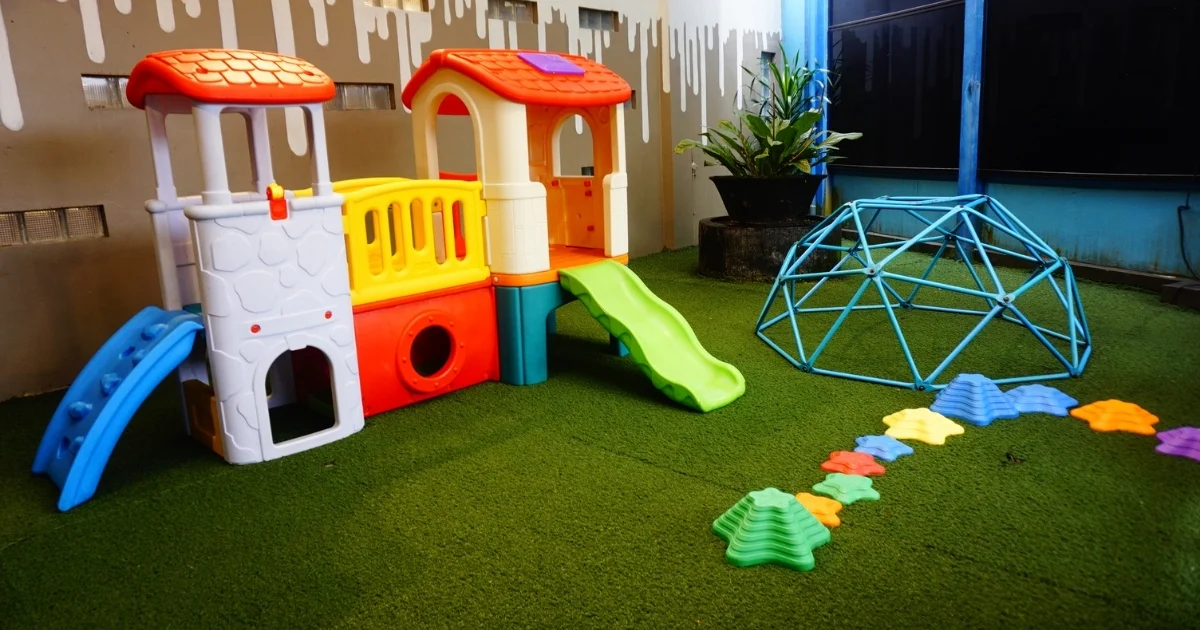
Schools and daycare centers across Southern California face a constant balancing act between maintaining safe playground environments and managing tight facility budgets. Traditional playground surfacing materials like wood chips and rubber mulch create challenges that artificial turf playground systems solve: frequent replenishment, ongoing maintenance, and inconsistent fall protection as materials displace and degrade. Meanwhile, liability concerns and evolving safety standards demand surfaces that meet strict certification requirements while remaining accessible and functional year-round.
Modern surfacing solutions address both challenges simultaneously. IPEMA-certified playground turf systems deliver reliable fall height protection, eliminate the need for water-intensive maintenance, and provide a stable, ADA-compliant surface that lasts over a decade without material replacement. For facility managers in Orange County, Huntington Beach, and throughout Southern California, understanding how these systems meet safety standards while reducing long-term costs makes the difference between reactive maintenance and strategic investment in children’s safety.
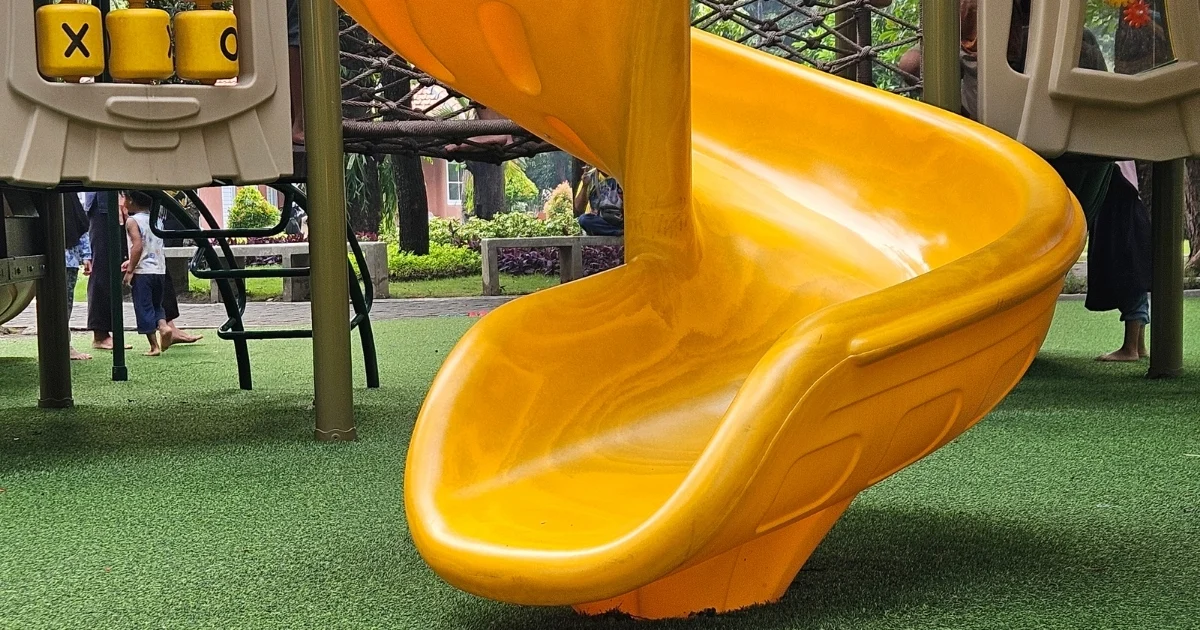
IPEMA Certification and Critical Fall Height Requirements for Playground Safety Surfacing
The International Play Equipment Manufacturers Association (IPEMA) provides third-party certification that playground surfaces meet ASTM F1292 fall safety standards. This certification protects schools and daycare facilities from liability by documenting that surfacing materials have been independently tested for impact attenuation at specific fall heights. When an accident occurs, IPEMA certification demonstrates that facility managers exercised due diligence in selecting appropriate safety surfacing. Facilities should specify IPEMA-certified playground turf to ensure third-party verification of safety performance.
Understanding ASTM F1292 Testing for Playground Surfaces
ASTM F1292 testing for artificial turf playground surfaces measures how well a surface absorbs impact energy when a weighted headform drops from various heights. An artificial turf playground system achieves different critical fall height ratings based on the combination of turf pile depth and shock-absorbing pad thickness installed beneath. A system with 1½- to 2-inch pile and a ½-inch shock pad might be certified for falls up to four feet, while a 2½-inch pile with 1-inch padding could protect against eight-foot falls. These ratings must match or exceed the highest designated play surface on your equipment.
| Equipment Height | Minimum Critical Fall Height Rating | Typical Turf System Configuration |
|---|---|---|
| Up to 4 feet | 4 feet minimum | 1½- to 2-inch pile + ½-inch shock pad |
| 5-6 feet | 6 feet minimum | 2-inch pile + ¾-inch shock pad |
| 7-8 feet | 8 feet minimum | 2½-inch or deeper pile + 1-inch shock pad |
| 9-10 feet | 10 feet minimum | 3-inch pile + 1¼-inch shock pad |
Artificial Grass for Daycare Centers and Schools: Long-Term Cost Analysis vs. Traditional Surfacing
Initial installation costs for synthetic turf appear higher than wood chips or rubber mulch. However, examining total cost of ownership over ten years reveals a dramatically different financial picture. Selecting the best turf for school playgrounds means balancing upfront cost with long-term performance and safety certification requirements.
- Years 1-3: Wood chips require full replacement multiple times, rubber mulch needs major top-offs, while artificial turf incurs only minor grooming costs
- Annual maintenance hours: Traditional surfacing demands substantially more labor for raking, weeding, and redistribution versus minimal turf grooming and infill checks
- Material replenishment: Loose-fill options require significant volume replacement annually to maintain proper depth and fall protection, while turf needs no material additions
- Water elimination: Facilities using irrigation for dust control on traditional surfaces incur ongoing water costs that artificial grass eliminates entirely
- Replacement timeline: Quality playground turf lasts over a decade before replacement, while wood chips need frequent renewal and rubber mulch requires replacement within several years, creating multiple reinstallation expenses
- ADA compliance: Wheelchair accessibility on loose-fill surfaces requires constant maintenance to prevent rutting and displacement, whereas turf maintains firm, stable accessibility without intervention
Hidden Costs of Traditional Playground Surfacing Materials
Traditional loose-fill materials require continuous reinvestment that many facility budgets fail to anticipate. Wood chips compact, decompose, and migrate out of play zones, requiring frequent complete replacement. Rubber mulch lasts longer but still needs significant top-offs annually as material disperses and degrades. Both options demand regular labor for raking, redistribution, weed removal, and border maintenance. When you calculate these recurring expenses alongside the hidden costs of water usage for dust control and drainage repairs from displaced material, the true expense of traditional surfacing compared to an artificial turf playground becomes apparent.
How to Maintain Playground Artificial Grass and Ensure Optimal Safety Performance
Monthly and Quarterly Maintenance Protocols
Proper artificial turf playground maintenance preserves both the safety certifications and extended lifespan that make synthetic turf vs rubber mulch comparisons favor artificial systems. Monthly protocols for high-traffic commercial installations include visual inspections of seams, infill level checks, and removal of debris that could create tripping hazards. Staff should look for any separation at seam lines, areas where infill has migrated away from high-use zones, and accumulation of leaves or trash that interferes with drainage.
Quarterly maintenance includes infill redistribution using a power broom and antimicrobial treatments to control bacteria in high-moisture areas. Enzyme-based cleaners address organic contamination without damaging turf materials.
Annual Safety Inspections and Documentation Requirements
Annual professional inspections document that the system maintains its original fall height rating and safety certifications. Certified inspectors measure infill depth at multiple points, test drainage function, examine shock pad compression, and verify that the surface still meets ASTM standards for impact attenuation. This documentation proves essential for insurance compliance and liability protection. Schools and daycare centers should maintain detailed maintenance logs showing all grooming, sanitization, and inspection activities, as these records demonstrate ongoing commitment to playground fall height requirements that protect both children and the facility from legal exposure.
| Maintenance Task | Frequency | Estimated Time |
|---|---|---|
| Debris removal and visual inspection | Weekly | 15-30 minutes |
| Infill redistribution and grooming | Monthly | 1-2 hours |
| Sanitization and deep cleaning | Quarterly | 2-3 hours |
| Professional safety inspection and certification | Annually | 3-4 hours |
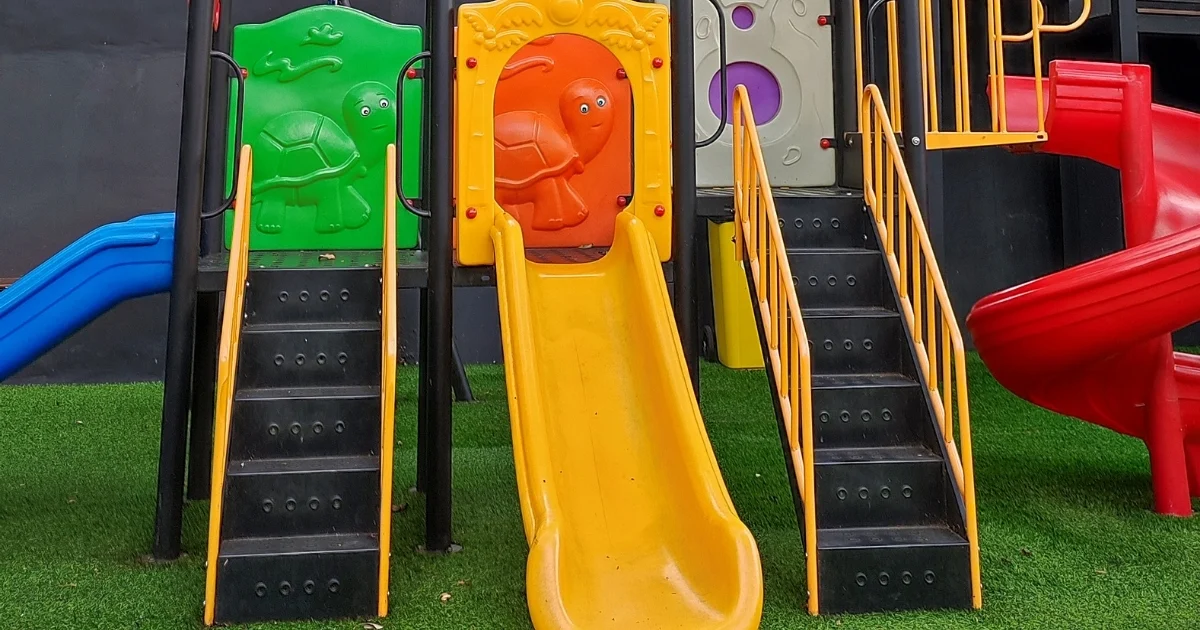
Turf Your Playground Around to Safety and Savings at Go Turf Artificial Grass & Pavers
Upgrading your school or daycare playground with certified safety surfacing protects children while reducing the long-term financial burden of constant maintenance and material replacement. Go Turf Artificial Grass & Pavers specializes in commercial playground installation costs that meet all IPEMA certification requirements and ASTM safety standards. Our team conducts thorough site assessments, analyzes your specific playground fall height requirements, and provides detailed cost comparisons showing exactly how artificial turf playground systems deliver value for your facility over ten to fifteen years.
Whether you manage a private daycare center, public school district, or community recreation facility, we bring owner-operated expertise without call center runarounds or pressure to choose specific brands. Contact us today for a consultation that addresses your unique safety concerns, budget constraints, and timeline requirements. We serve property managers and facility directors throughout Orange County and Southern California with installations backed by comprehensive warranties and ongoing maintenance support that keeps your playground safe, compliant, and beautiful for years to come.
FAQs
These common questions help facility managers understand the practical considerations of upgrading to certified playground surfacing.
1. What pile height of artificial turf do I need for my playground equipment?
Critical fall height requirements determine pile depth—equipment up to four feet typically needs 1½- to 2-inch turf with shock pad, while six- to eight-foot structures require 2½-inch or deeper pile with thicker padding. IPEMA testing documentation will specify exact requirements for your equipment configuration. Always consult with certified installers who can match your specific playground layout to appropriate surfacing systems that meet safety standards.
2. Is artificial grass for daycare centers safe for toddlers and young children?
Yes, when properly installed with appropriate shock-absorbing underlayment and IPEMA certification for your equipment heights. Modern playground turf includes antimicrobial infill, lead-free materials, and non-abrasive fibers specifically designed for children’s sensitive skin. Quality systems exceed safety standards while providing a softer, more forgiving surface than concrete, asphalt, or compacted dirt that children might encounter on traditional playgrounds.
3. How does synthetic turf compare to rubber mulch for playground safety?
Both materials can meet ASTM fall safety standards with proper installation. However, artificial turf offers superior ADA accessibility, eliminates displacement issues, and requires significantly less maintenance than rubber mulch. Turf maintains consistent fall protection without the annual replenishment that loose-fill materials demand. Additionally, quality playground turf systems stay cooler in direct sunlight than dark rubber mulch and don’t harbor insects or create the dust issues common with degrading rubber particles.
4. What are the typical commercial playground installation costs per square foot?
Professional installation costs vary based on site preparation needs, shock pad thickness, turf quality, and project size. Larger projects typically achieve better per-square-foot pricing due to economies of scale, while complex sites requiring extensive grading or drainage work may fall toward the higher end of the range. Contact certified installers for detailed quotes specific to your facility’s requirements.
5. How long does playground artificial grass last in high-traffic school environments?
Quality commercial-grade playground turf typically lasts over a decade with proper maintenance, even in high-traffic areas experiencing constant use throughout the school year. This lifespan far exceeds wood chips requiring frequent replacement and rubber mulch lasting several years. Properly maintained turf provides consistent safety performance throughout its lifecycle without the material replenishment, displacement repairs, or degradation that plague traditional surfacing options.