
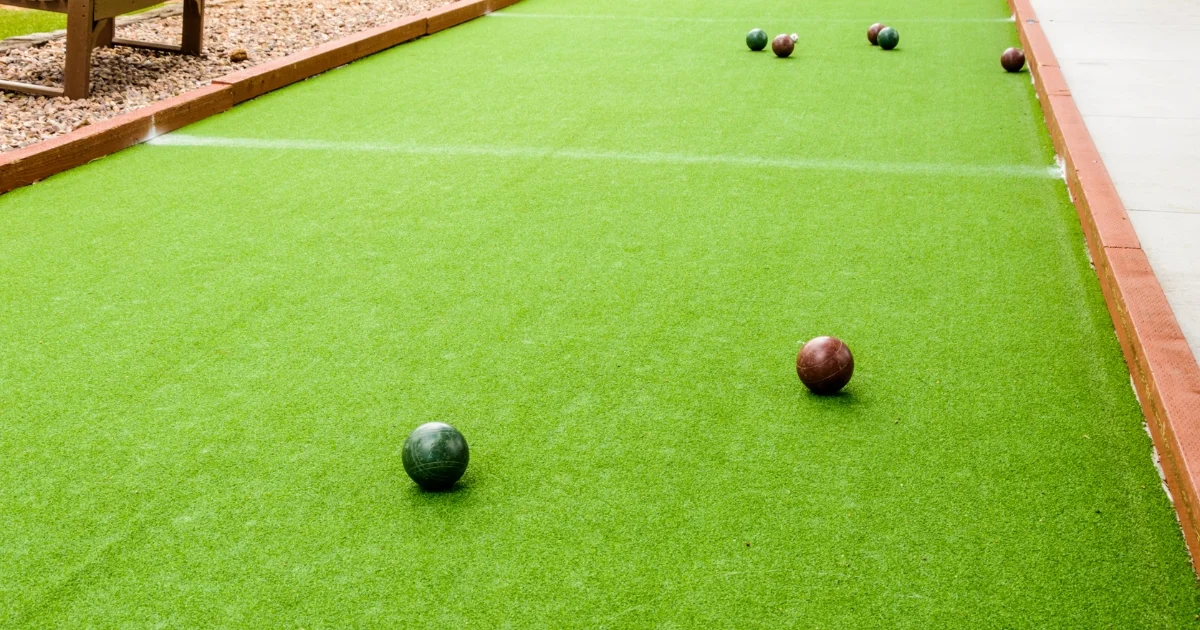
Homeowners across Southern California are transforming their backyards into entertainment destinations, and one feature has emerged as the centerpiece of outdoor gatherings: the bocce ball court. Once reserved for Italian social clubs and resort properties, these courts have become must-have amenities for residential properties in Orange County, Huntington Beach, Mission Viejo, and surrounding communities. They offer a perfect blend of casual competition, social interaction, and timeless aesthetic appeal that complements any outdoor living space.
The success of your backyard bocce court hinges on one critical decision: the surface material. While traditional options like oyster shells, decomposed granite, and crushed stone have their place, artificial turf has emerged as the superior choice for homeowners who want tournament-quality play without the constant maintenance headaches. The right surface transforms a simple court into a year-round entertainment feature that requires virtually no upkeep while delivering consistent, predictable gameplay that rivals professional installations.
What Makes Artificial Turf the Superior Bocce Court Surface Material
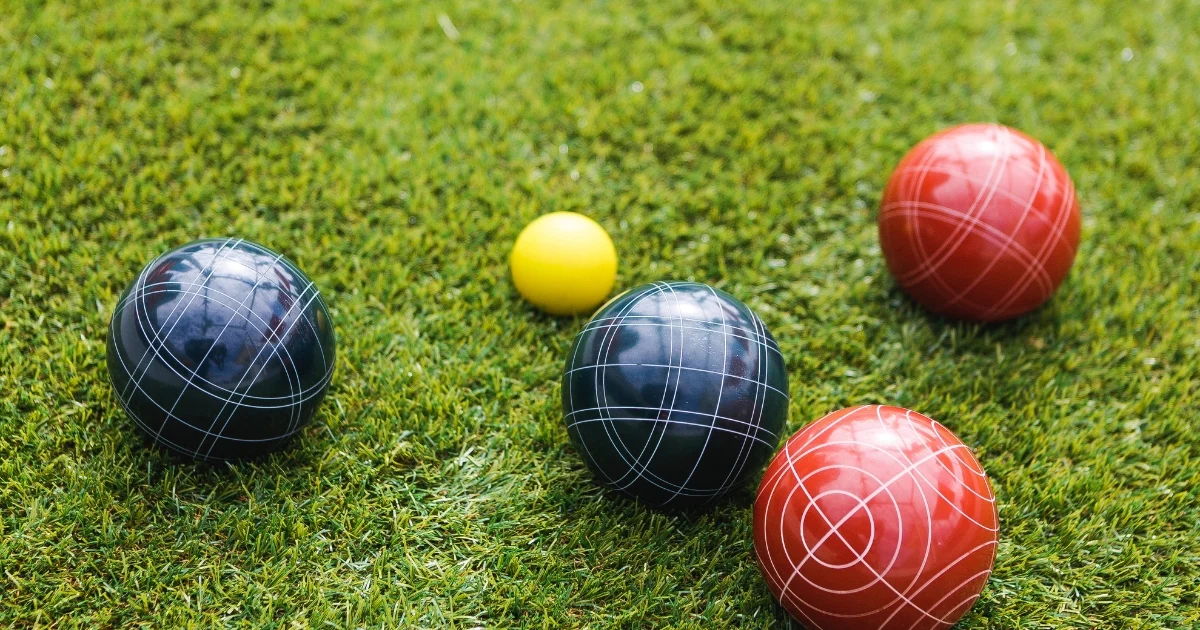
What is the best material for bocce courts? Artificial turf outperforms traditional options in many categories that matter most to homeowners, including maintenance, consistency, and durability. Oyster shells require constant raking and replenishing as they break down and scatter. Decomposed granite compacts unevenly, creating unpredictable ball roll and requiring regular top-dressing. Clay surfaces demand daily maintenance, crack in heat, and turn to mud during rain. Crushed stone migrates, creates dust, and needs frequent leveling to maintain playability. Homeowners researching artificial turf for bocce quickly discover that synthetic surfaces eliminate the raking, watering, and material replenishment cycles that plague traditional installations.
Bocce ball courts built with synthetic turf deliver tournament-quality consistency that traditional materials simply cannot match. The surface remains perfectly level season after season, eliminating the frustration of balls veering off course due to ruts, divots, or material displacement.
Maintenance Requirements: Artificial Turf vs Traditional Surfaces
Maintenance elimination represents the most compelling advantage of synthetic turf bocce surface applications. Traditional bocce court surface materials demand weekly raking, monthly material replenishment, constant weed control, and regular watering to prevent dust and maintain cohesion. A synthetic surface requires nothing more than occasional brushing to keep fibers upright and periodic rinsing to remove debris. For Southern California homeowners facing water restrictions and drought conditions, the elimination of irrigation requirements alone justifies the investment. The surface remains playable year-round without seasonal preparation or winterization, and it drains efficiently during rare rainfall events without creating muddy conditions or erosion problems.
Bocce Court Dimensions and Design Flexibility for Your Backyard
Understanding bocce court dimensions for small yards opens possibilities for homeowners who assume their property cannot accommodate this feature. Official bocce ball courts measure 91 feet by 13 feet, but residential installations successfully operate at reduced dimensions while maintaining authentic gameplay. Many professional installers recommend a 70-foot-by-10-foot court as the ideal compromise, providing sufficient length for strategic play while fitting comfortably alongside other backyard features.
- Compact configurations: Courts as small as 60 feet by 8 feet work well for casual family play and fit in side yards or narrow spaces between structures
- Integration with hardscaping: Courts pair beautifully with adjacent paver patios, creating seamless transitions between play areas and seating zones
- Multi-use design: The flat, consistent surface doubles as a putting green, cornhole area, or general lawn games zone when not hosting bocce matches
- Lighting considerations: Low-voltage LED perimeter lighting extends playability into evening hours and creates dramatic visual impact for nighttime entertaining
- Spectator accommodation: Designing built-in seating along court edges or positioning near existing outdoor furniture creates comfortable viewing areas for non-players
The flexibility of backyard bocce court installation allows creative solutions for challenging spaces. L-shaped configurations work in corner lots. Courts can follow gentle slopes with proper base preparation. Integration with retaining walls, raised planters, or existing hardscape features creates cohesive outdoor living environments rather than isolated recreational zones. Professional installers assess drainage patterns, sun exposure, and traffic flow to position courts for optimal functionality and visual appeal.
Real Costs: Artificial Turf Bocce Courts vs Traditional Materials Over Time
Understanding residential bocce ball court cost requires looking beyond initial installation expenses to total cost of ownership. While synthetic turf carries higher upfront investment, the long-term financial picture strongly favors artificial surfaces over traditional materials. A typical 70-foot-by-10-foot artificial turf installation ranges from $8,000 to $15,000 depending on base preparation requirements, drainage solutions, and turf quality. Traditional installations cost $3,000 to $6,000 initially but generate ongoing expenses that quickly erode the apparent savings.
| Cost Category | Artificial Turf (10 Years) | Traditional Materials (10 Years) |
|---|---|---|
| Initial Installation | $8,000–$15,000 | $3,000–$6,000 |
| Annual Maintenance Labor | $0–$200 | $500–$1,200 |
| Material Replenishment | $0 | $200–$400 annually |
| Water Usage | $0 | $150–$300 annually |
| 10-Year Total | $8,000–$17,000 | $11,500–$25,000 |
Climate-specific considerations significantly impact long-term value calculations. Southern California’s intense sun exposure degrades traditional materials faster than moderate climates, accelerating replacement cycles. Artificial turf installations address these regional challenges through UV-stabilized fibers, efficient drainage systems, and materials engineered for extreme temperature fluctuations.
Professional installation ensures proper base preparation, drainage solutions, and expert turf selection. These systems include compacted aggregate base layers, precise grading, and perimeter restraints that maintain dimensional stability for 15–20 years with minimal intervention.
How to Build a Bocce Court That Enhances Your Entire Outdoor Living Space
Professional bocce ball courts begin with a comprehensive site assessment rather than simply clearing a rectangular space and laying material. Experienced installers evaluate existing drainage patterns, identify utility lines, assess soil stability, and consider how the court integrates with planned or existing outdoor features. This holistic approach prevents common mistakes like positioning courts in natural drainage channels, creating access conflicts with other yard zones, or failing to account for sun angles that create glare problems during peak play times.
| Installation Phase | Key Considerations | Timeline |
|---|---|---|
| Site Preparation & Base Installation | Excavation, utility marking, drainage assessment, aggregate placement, compaction, grading | 2–3 days |
| Perimeter Edging & Borders | Paver installation, decorative stone placement, restraint systems | 1 day |
| Turf Installation | Turf rolling, seaming, trimming, securing | 1 day |
| Finishing Details | Infill application, brushing, border treatments | 1 day |
Transform Your Backyard with a Professional Bocce Court at Go Turf Artificial Grass and Pavers
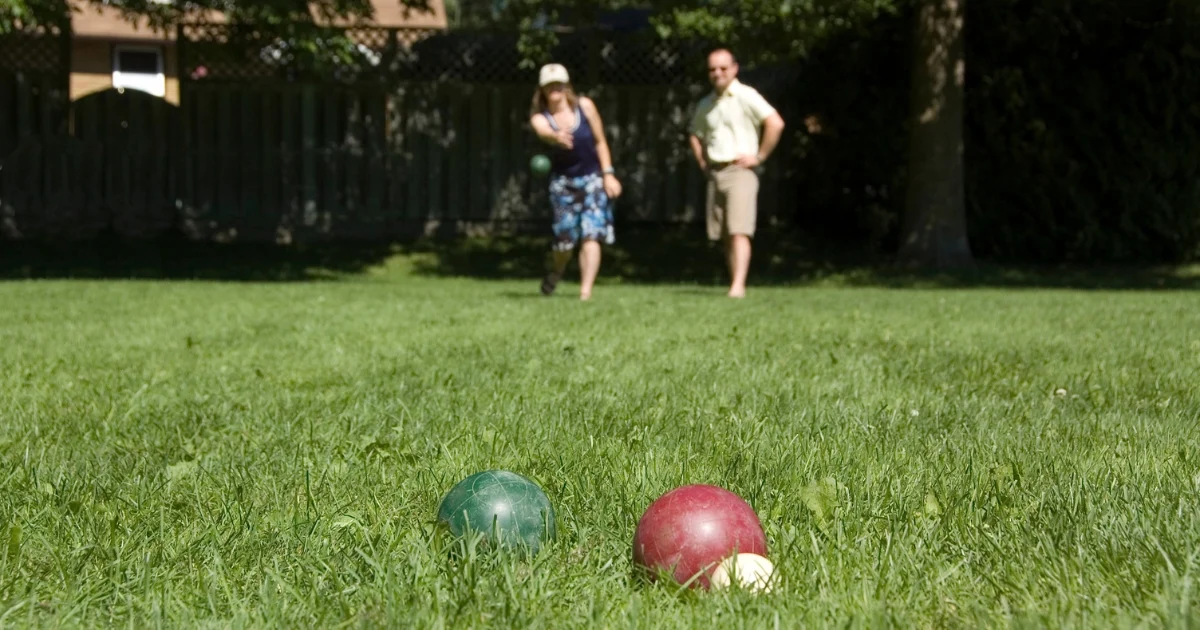
Creating an exceptional bocce court requires more than clearing space and laying material. It demands expertise in base preparation, drainage engineering, turf selection, and integration with your complete outdoor living vision. Go Turf Artificial Grass and Pavers brings decades of experience installing tournament-quality bocce ball courts throughout Orange County and surrounding Southern California communities. Our team designs courts that account for the unique challenges of regional climate conditions, from intense sun exposure to occasional heavy rainfall, and we create solutions that perform flawlessly year-round. We work directly with homeowners throughout the entire process, from initial consultation through final installation, with no call centers or pressure tactics. Contact us today for a free on-site assessment and discover how a professionally installed court can transform your backyard into the neighborhood’s premier entertainment destination.
FAQs
Homeowners considering bocce ball courts often have similar questions about costs, dimensions, materials, and installation requirements. Below are answers to the most common concerns we hear during consultations.
1. What is the best surface material for a bocce ball court?
Artificial turf is the best surface material for bocce ball courts due to its consistent ball roll, zero maintenance requirements, and year-round playability. Unlike traditional materials such as oyster shells or decomposed granite that require constant raking and replenishing, synthetic turf provides a tournament-quality surface that lasts 15–20 years with minimal upkeep.
2. How much does it cost to build a backyard bocce court with artificial turf?
A residential artificial turf bocce court typically costs $8,000–$15,000 depending on size, base preparation, and turf quality. While the upfront cost is higher than traditional materials, artificial turf eliminates ongoing maintenance expenses including water, materials, and labor that can exceed $500–$1,000 annually. Over 10 years, synthetic surfaces often prove more cost-effective than traditional materials when total ownership costs are calculated.
3. What are the minimum bocce court dimensions for a small backyard?
The official bocce court size is 91 feet by 13 feet, but residential courts can be built as small as 60 feet by 10 feet and still provide excellent gameplay. Many homeowners opt for 70-foot-by-10-foot courts that balance authentic play experience with realistic space constraints while fitting alongside other backyard features. Even compact configurations deliver the strategic elements and social interaction that make bocce such an appealing backyard amenity.
4. Can a bocce ball court be used for other purposes?
Yes, artificial turf bocce courts are highly versatile and can double as putting greens, cornhole areas, outdoor event spaces, or general lawn game zones. The flat, durable surface makes it ideal for hosting gatherings, children’s play areas, or even temporary seating arrangements for parties when not being used for bocce.
5. Do I need a permit to install a bocce ball court in my backyard?
Permit requirements vary by municipality and HOA regulations, but most residential bocce courts do not require permits since they are considered landscaping improvements rather than structures. However, it is essential to check local building codes and HOA guidelines before installation, particularly regarding drainage, setbacks from property lines, and any restrictions on artificial turf usage. Projects involving significant grading, retaining walls, or electrical work for lighting may trigger permit requirements even if the court itself does not.