
Shopping for artificial grass can feel overwhelming when you’re faced with endless options: online marketplaces promising low prices, big-box stores with limited selections, local dealers offering personalized service, and manufacturers selling direct. Each channel claims to offer the best value, but the reality is that knowing where to buy your turf prevents premature fading, backing deterioration, or drainage failures that force costly replacements within just a few years. The wrong purchasing decision can compromise your investment in a lawn that should last two decades or more.
Understanding where to buy your turf—whether from local suppliers or national retailers—requires more than comparing price tags. You need to evaluate warranty support, product quality verification processes, installation guidance, and long-term value. This guide walks you through the main purchasing channels, quality indicators that separate premium turf from budget products, hidden costs that inflate your total investment, and the decision framework that helps Southern California homeowners make informed choices. By the end, you’ll know exactly how to choose quality artificial turf that delivers genuine 20-year performance rather than marketing promises that fade along with your lawn.
Your Artificial Grass Purchasing Options Compared
When deciding where to buy, five main channels dominate the market, each with distinct advantages and limitations. Searching for “artificial grass suppliers near me” returns dozens of results, but not all suppliers offer the same product quality, expertise, or long-term support. Online retailers like Amazon and specialized e-commerce sites offer convenience and competitive pricing, but you’re buying sight-unseen with limited expert guidance. Big-box home improvement stores provide hands-on product viewing and immediate pickup, yet their selections typically focus on entry-level products suitable for small DIY projects. Local specialty dealers combine product expertise with personalized consultation, though their pricing may appear higher at first glance.
The local vs online artificial grass purchase decision depends on your project type, which significantly influences the best place to buy fake grass for your specific needs. Residential lawns covering 500-2,000 square feet benefit from local dealers who provide site evaluations and installation support. Commercial applications need bulk pricing and consistent product availability across multiple shipments.
- Hidden shipping math: A roll priced $0.30/sq ft cheaper online can lose its edge once freight-class shipping on a 100+ lb roll is factored in — always ask for an all-in, delivered price before comparing tags.
- What “support” actually covers: Ask whether guidance is a phone call away or an on-site visit — the difference matters most on sloped yards, drainage-heavy lots, or anything with existing hardscape to tie into.
- What to check on a sample swatch: Bend the backing to check for cracking, rub the fibers to test shedding, and view the color in direct sunlight — swatches shown under indoor showroom lighting can be misleading.
- The restocking fee fine print: Look for a percentage cap (often 15–25%) and a return window before ordering — some online sellers won’t accept returns at all once a roll has been cut.
- How warranty claims actually get resolved: A local dealer can often inspect a seam failure or fading issue in person and file the claim directly with the manufacturer, versus mailing photos and waiting on a corporate queue.
- What “regional expertise” looks like in practice: knowing which infill resists heat buildup in valley microclimates, which base materials handle clay soil, and which cities require permits or HOA sign-off before installation.
Quality Indicators That Separate 20-Year Turf from 5-Year Products
Face weight represents the ounces of fiber per square yard and directly correlates with durability and appearance retention. Budget turf measures 40-50 ounces, mid-grade 50-65 ounces, and premium 20-year turf starts at 65 ounces. Stitch rate, measured in stitches per square meter, determines fiber density and resilience. Minimum specifications for quality residential turf should exceed 14,000 stitches per square meter; professional-grade products reach 18,000-20,000 stitches.
Understanding what to look for when buying artificial grass starts with backing material quality, which determines dimensional stability and drainage performance throughout the product’s lifespan. Backing material quality determines dimensional stability regardless of your purchasing channel. Single-layer polyurethane backing represents the minimum acceptable standard, while dual-layer backing with polyurethane primary and latex secondary coating provides superior tear resistance. Perforated backing ensures proper drainage, critical in Orange County’s occasional heavy rains and essential for pet areas. UV stabilization protects against Southern California’s intense sunlight, which can degrade unprotected fibers within 3-5 years. Verify that products carry UV inhibitor certifications rather than vague “UV resistant” marketing claims.
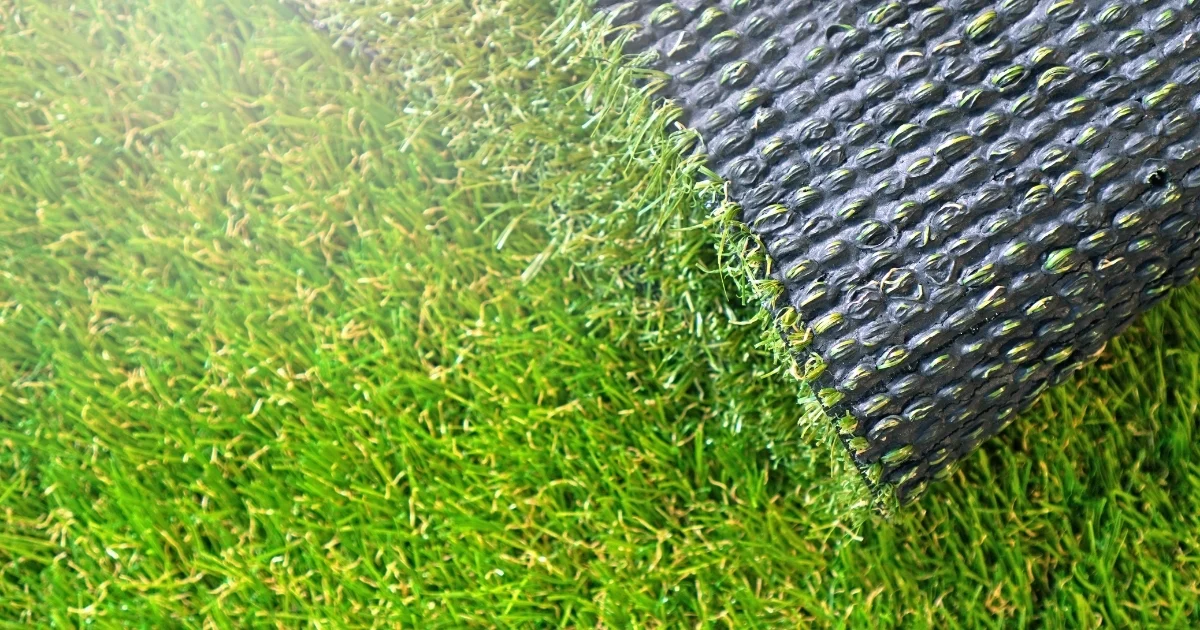
Physical sample evaluation provides insights no specification sheet can match. Perform the density test by pressing your palm firmly into the turf; quality products spring back immediately, while inferior turf remains compressed. Bend the backing material; it should flex without cracking or showing stress lines. Tug firmly on individual fibers; they should resist pulling free from the backing. Examine color consistency across the sample, checking for streaking or uneven dye penetration.
| Quality Indicator | Minimum Standard | Premium Specification |
|---|---|---|
| Face Weight | 60 oz/sq yard | 75-90 oz/sq yard |
| Stitch Rate | 14,000 per sq meter | 18,000+ per sq meter |
| Drainage Rate | 30 inches/hour | 50+ inches/hour |
| Warranty Coverage | 8-10 years | 15-20 years |
How to Choose Quality Artificial Turf: A Buyer’s Verification Checklist
Smart buyers verify quality claims before committing to a purchase by asking suppliers ten critical questions. Request documentation of face weight and stitch rate specifications rather than accepting verbal assurances. Ask about manufacturing origin—domestic products typically maintain stricter quality controls than imported alternatives. Inquire about lead content testing, particularly for households with children or pets, as some imported turf has tested positive for concerning levels. Verify drainage rates with specific inches-per-hour measurements rather than generic “good drainage” claims. Request infill recommendations specific to your application, as suppliers familiar with their products provide detailed guidance while those simply reselling may offer vague suggestions.
Ask to see installation references from projects completed 5-10 years ago, not just recent work. Quality products maintain appearance and performance over time, and established suppliers confidently share long-term results. Request copies of warranty documents before purchasing, reviewing coverage specifics, exclusions, and claims procedures. Inquire about UV stabilization certifications from recognized testing organizations rather than marketing claims. Ask whether the supplier offers installation support or training, even if you plan DIY installation—suppliers invested in successful outcomes provide guidance. Finally, request information about proper maintenance requirements, as realistic expectations prevent disappointment and ensure your investment delivers promised longevity.
Cost Comparison: Hidden Expenses Beyond the Purchase Price
The artificial grass cost comparison extends far beyond the advertised price per square foot, regardless of where you buy. Base material requirements add $1-3 per square foot depending on whether you need crushed rock, decomposed granite, or specialized drainage layers. Delivery fees range from free for local purchases to substantial charges for online orders, with some suppliers charging fuel surcharges or residential delivery fees. Installation tools for DIY projects include plate compactors ($75-150 rental), power brooms ($50-100 rental), seaming equipment ($30-80 purchase), and specialty knives ($15-40).
| Cost Component | Budget Approach | Premium Approach |
|---|---|---|
| Total Initial Investment (1,000 sq ft) | $3,225 | $16,900 |
| Expected Lifespan | 5-7 years | 20+ years |
| Annual Cost (amortized) | $460-645 | $845 |
Warranty value differences between purchasing channels significantly impact long-term costs. Manufacturer warranties through authorized dealers cover defects for 15-20 years with local claims support. Big-box warranties limit coverage to 8-10 years, while online retailers often require you to ship defective materials back at your expense. The warranty administration advantage of local dealers becomes especially valuable 5-10 years post-installation when issues emerge, and you need responsive support.
Finding the Best Place to Buy Fake Grass for Your Specific Project
The best place to buy fake grass depends on your project scope, timeline, and expertise level. Small decorative projects under 200 square feet may work well with big-box store products if you have DIY skills and realistic expectations about a 5-7 year lifespan. Mid-size residential lawns from 500-1,500 square feet benefit most from local specialty dealers who provide site evaluation, quality products, and installation support that prevents costly mistakes. Large commercial projects or multiple installations require relationships with suppliers who maintain consistent inventory, offer contractor pricing, and provide technical support for complex applications.
Pet owners should prioritize suppliers specializing in antimicrobial backing and high-drainage products specifically designed for animal use, as general-purpose turf often fails prematurely in pet areas. Putting green installations demand precision specifications and specialized infill that only dedicated dealers or manufacturers can fulfill reliably. High-traffic commercial applications need products tested for heavy use with warranties that cover commercial specifications, not just residential use. Match your supplier selection to your project requirements rather than defaulting to the most convenient or least expensive option, as mismatched products lead to premature replacement regardless of initial savings.
Smart Buyers Choose Local Expertise with Go Turf Artificial Grass & Pavers
When you partner with a supplier who combines manufacturer-direct quality with genuine local expertise and transparent pricing, the purchasing decision becomes straightforward. Go Turf Artificial Grass & Pavers eliminates the guesswork by offering free samples you can evaluate in your own outdoor space, on-site consultations that assess your specific property conditions, and upfront pricing without hidden delivery fees or surprise charges. The company’s 20-year product warranties backed by local installation support mean you’re not navigating warranty claims with distant corporate offices years after purchase. Owner-operated service ensures you receive personalized attention rather than call center scripts, with recommendations based on your actual needs rather than inventory pressure.
Southern California homeowners from Orange County to Anaheim trust the combination of premium materials, professional installation expertise, and long-term local accountability that makes the investment worthwhile. Whether you’re replacing a water-hungry lawn, creating a pet-friendly play area, or upgrading commercial property landscaping, the right purchasing decision starts with a supplier who prioritizes your long-term satisfaction over quick sales. Contact Go Turf Artificial Grass & Pavers today to schedule your free consultation and discover why quality-focused buyers choose local expertise over anonymous online transactions.
FAQs
Southern California homeowners consistently ask these questions when evaluating artificial grass purchasing options and long-term value.
1. Is it cheaper to buy artificial grass online or from a local supplier?
Online retailers often advertise lower per-square-foot pricing, but hidden costs like shipping, lack of installation guidance, and difficult returns can make them more expensive overall. Local suppliers include delivery, provide samples you can physically evaluate, and offer installation support that saves money on costly mistakes. When you factor in the total cost of ownership including warranty support and expert consultation, local purchasing frequently delivers better value despite higher initial material costs.
2. What’s the difference between artificial grass from Home Depot and specialty dealers?
Big-box stores typically carry entry-level to mid-grade products with 40-60 ounce face weight suitable for small DIY projects, while specialty dealers stock professional-grade turf with 60-90+ ounce face weight featuring superior backing, longer warranties, and higher UV protection. The quality difference directly impacts whether your turf lasts 5-7 years versus 20+ years. Specialty dealers also provide expert guidance on product selection for your specific application, whether that’s pet areas, putting greens, or high-traffic residential lawns.
3. Should I buy artificial grass samples before purchasing?
Absolutely—samples let you verify quality claims, test drainage, assess fiber resilience, and see how the color looks in your actual lighting conditions. Reputable suppliers provide free samples because they’re confident in their product quality, while suppliers who charge for samples or refuse to provide them may be hiding inferior products. Evaluating samples in your outdoor environment reveals characteristics that photos and showroom lighting cannot convey, including temperature retention, color accuracy, and texture.
4. How much artificial grass should I order beyond my measured area?
Order 5-10 percent extra to account for cutting waste, seam matching, and future repairs. For irregularly shaped areas or spaces requiring multiple seams, 10 percent overage is recommended. Quality suppliers will help calculate exact needs during consultation to prevent over-ordering while ensuring you have sufficient material for proper installation.
5. Can I return artificial grass if I order too much or don’t like it?
Return policies vary dramatically by supplier—online retailers often charge substantial restocking fees plus return shipping, while some won’t accept returns on cut materials at all. Local dealers typically offer more flexible policies and work with customers to ensure satisfaction before installation begins, minimizing return needs through accurate consultation and sampling. Always verify return terms before purchasing, especially for large orders.