
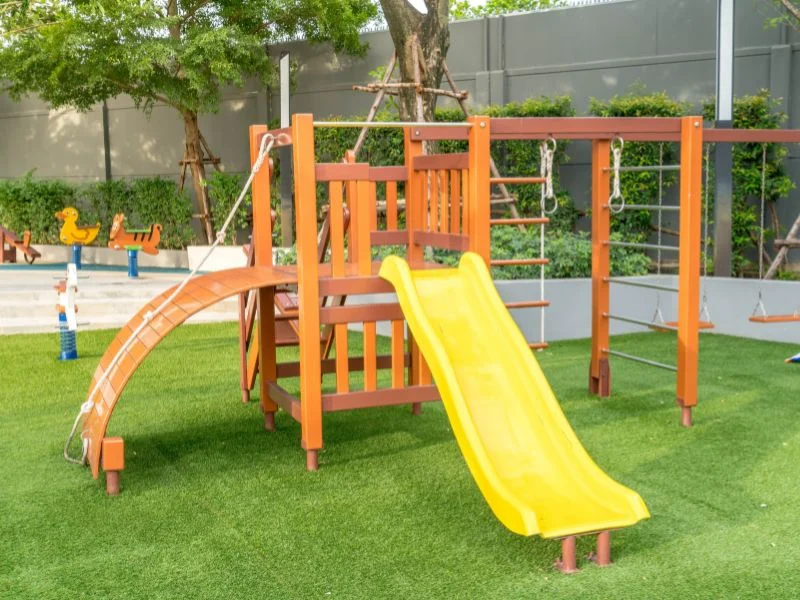
Ready to say goodbye to mowing and hello to a lush, green lawn all year round? Installing artificial turf might be just the solution you’re looking for. While it’s a project that requires some effort, with the right guidance, you can transform your outdoor space into a low-maintenance oasis. Let’s dive into our step-by-step guide to artificial turf installation.
Before You Begin: Planning Your Artificial Turf Installation
Before you roll out that green carpet, there’s some prep work to do :
- Measure your area accurately
- Choose the right type of artificial turf for your needs
- Gather all necessary tools and materials
- Check local regulations and obtain any required permits
Essential Tools and Materials
Here’s what you’ll need for your artificial turf installation :
| Tools | Materials |
|---|---|
| • Shovel • Rake • Plate compactor • Utility knife • Carpet kicker • Lawn roller | • Artificial turf • Weed barrier fabric • Base material (crushed stone) • Infill • Joining tape and adhesive • Landscape staples |
Step-by-Step Guide to Artificial Turf Installation
Now, let’s get down to business. Here’s your comprehensive guide to installing artificial turf :
Step 1: Prepare the Ground
- Remove existing grass and vegetation
- Excavate 3-4 inches of soil
- Ensure proper slope for drainage (about 1 inch per 8 feet)
Step 2: Install Base Material
- Spread a 3-4 inch layer of crushed stone
- Use a plate compactor to create a firm, even surface
- Ensure proper grading for drainage
Step 3: Lay Weed Barrier
- Roll out weed barrier fabric over the compacted base
- Overlap seams by 3-4 inches
- Secure with landscape staples
Step 4: Roll Out the Turf
- Unroll your artificial turf, allowing it to acclimate for 1-2 hours
- Ensure all pieces are facing the same direction for a uniform look
- Trim excess with a utility knife, leaving about 1 inch overhang at edges
Step 5: Secure the Seams
- Join sections using seaming tape and adhesive
- Use a carpet kicker to stretch the turf for a tight fit
- Trim any excess turf
Step 6: Secure the Edges
- Nail or staple the turf around the perimeter every 6-8 inches
- Bury the edges in a small trench for a seamless look
Step 7: Add Infill
- Spread infill material evenly across the turf
- Use a power broom or rake to work it into the fibers
- This helps weigh down the turf and keep fibers upright
Step 8: Final Touches
- Brush the turf to make fibers stand up
- Use a lawn roller for a smooth, even surface
Pro Tips for a Perfect Installation
- Always lay turf in the same direction for a uniform look
- Use a sharp utility knife for clean cuts
- Work on a dry day for best results
- Take your time – rushing can lead to mistakes
Common Challenges and How to Overcome Them
Even with our step-by-step guide to artificial turf installation, you might encounter some hurdles. Here’s how to handle them :
- Uneven Ground
Solution : Take extra time to level your base material properly. It’s crucial for a professional-looking result.
- Visible Seams
Solution : Ensure proper alignment and use high-quality seaming tape and adhesive. Brush fibers over seams for a seamless look.
- Drainage Issues
Solution : Double-check your slope and consider adding a drainage system if necessary.
Maintaining Your New Artificial Turf
Once you’ve completed your artificial turf installation, maintenance is a breeze:
- Rinse occasionally to remove dust and debris
- Brush the turf to keep fibers upright
- Remove leaves and other organic matter promptly
Frequently Asked Questions :
How long does artificial turf installation take?
For an average-sized yard, expect to spend 2-3 days on installation.
Can I install artificial turf over concrete?
Yes, but you’ll need to ensure proper drainage and use a shock-absorbing pad underneath.
Is professional installation better than DIY?
While DIY is possible, professional installation often yields better results, especially for larger or complex areas.
How long will my artificial turf last?
With proper care, high-quality artificial turf can last 15-20 years or more.
Installing artificial turf might seem daunting at first, but with this step-by-step guide, you’re well on your way to creating a beautiful, low-maintenance lawn. Remember, the key to a successful installation lies in proper preparation and attention to detail.